
Mobile Financial Applications: Fintech or Banking?
What role will banking play in the future of fintech? To what extent will the financial services and offerings provided by fintech companies align with banking based on mobile applications?
Let’s examine together how banking will fit into the future of fintech and how closely the financial services and offerings provided by fintech companies will align with banking based on mobile applications, referencing a report prepared by “App Annie” in collaboration with “Liftoff” using data from 2020. The report also includes analysis of mobile applications from several banks in Turkey.
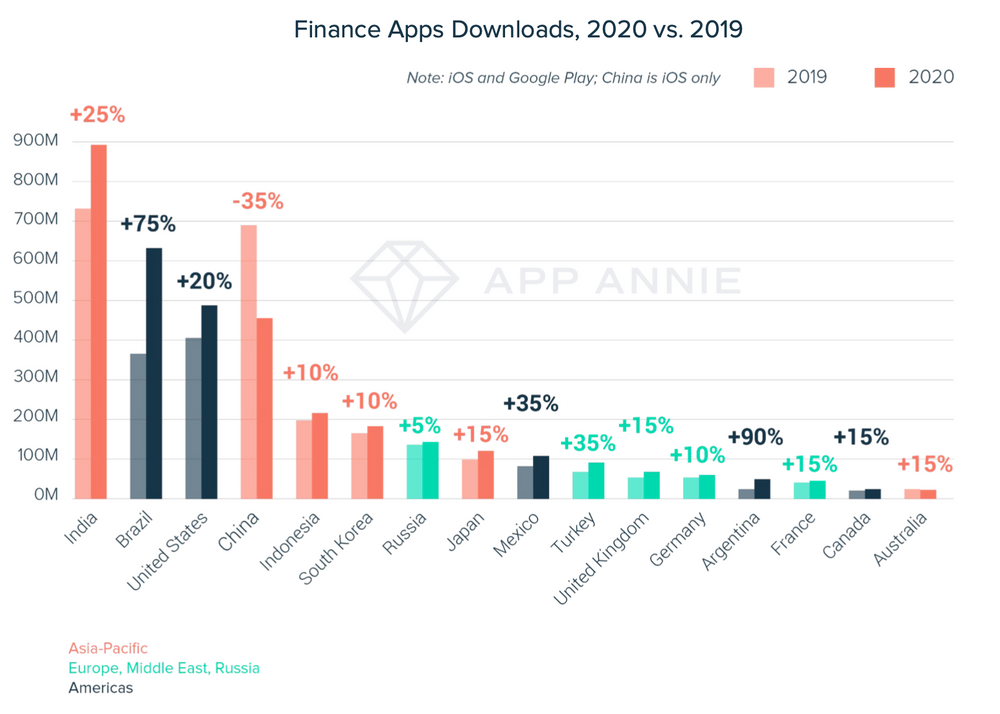
- In 2020, the installation of mobile financial applications showed a 15% increase compared to 2019, with users globally downloading and installing financial applications on their devices approximately 4.6 billion times. Additionally, users spent a total of 16.3 billion hours in these financial applications, representing a 45% increase in time spent compared to the previous year.
- Fintech applications have demonstrated significantly better performance in terms of user engagement, outperforming the top banking applications by 10.8 times. For example, in South Korea, fintech applications were used and visited on average 225 times per month.
In 2020, the average cost of installing a financial application on a user’s device was $2.45, and the cost of a user registering for a financial application was $7.96. Activation costs experienced a 5% decrease compared to 2019, reaching $9.78.
- Conversion rates indicate that users are more ready to engage with applications, as the activation rate increased from 19% to 25.1% compared to the previous year. However, the rate of users completing membership registrations has decreased from 46.2% to 30.8% compared to the previous year.
- From the perspective of app stores, it can be noted that the Android store provides more marketing opportunities. For example, the cost of installing an application on devices is 4.5 times cheaper on the iOS store compared to Android, and the activation cost is 8 times more affordable. Therefore, it has been observed that Android device users can convert to customers almost 2 times more effectively compared to iOS users.
According to App Annie’s report covering the year 2020, 188 applications were examined. Additionally, there were 57 billion interactions, 81 million clicks, and 12 million downloads recorded. The report also analyzed the first 20 million transactions conducted within the applications.
It is important to note that prominent trends were identified under 5 main headings regarding financial practices.
- Demand for finance applications in areas such as investment, banking, cash transfers and government/social benefits is increasing,
Financial Application Download Figures
- With the global growth of in-app usage, mobile is becoming an important channel for making financial decisions,
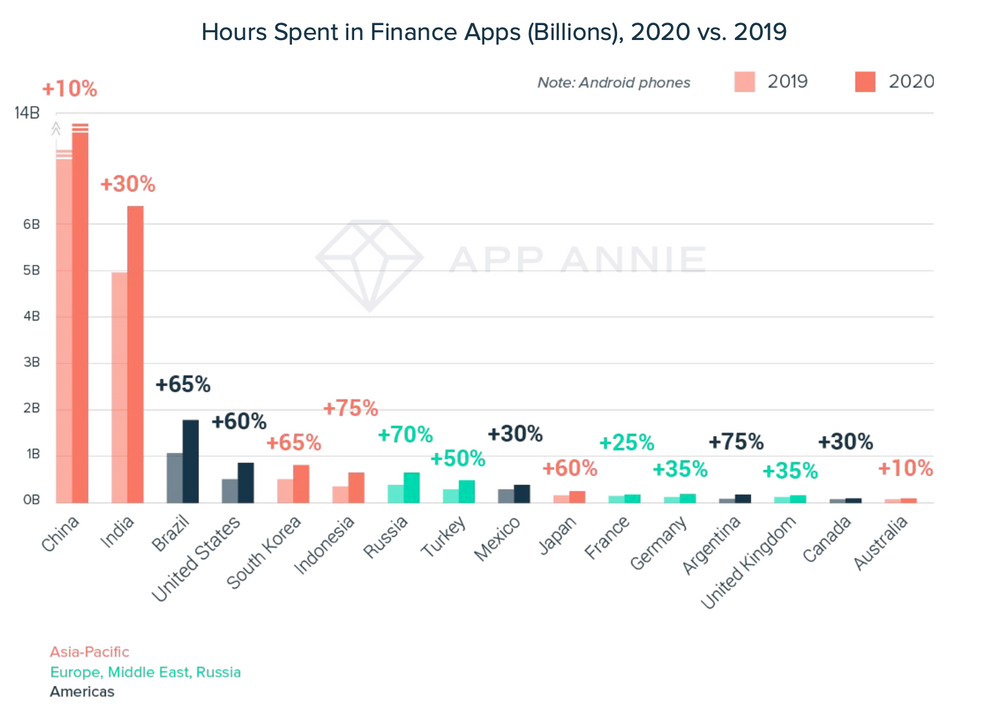
Time Spent in a Financial Application (Hours/Billion)
- By session, the best fintech apps outperform the best banking apps by up to 10.8x
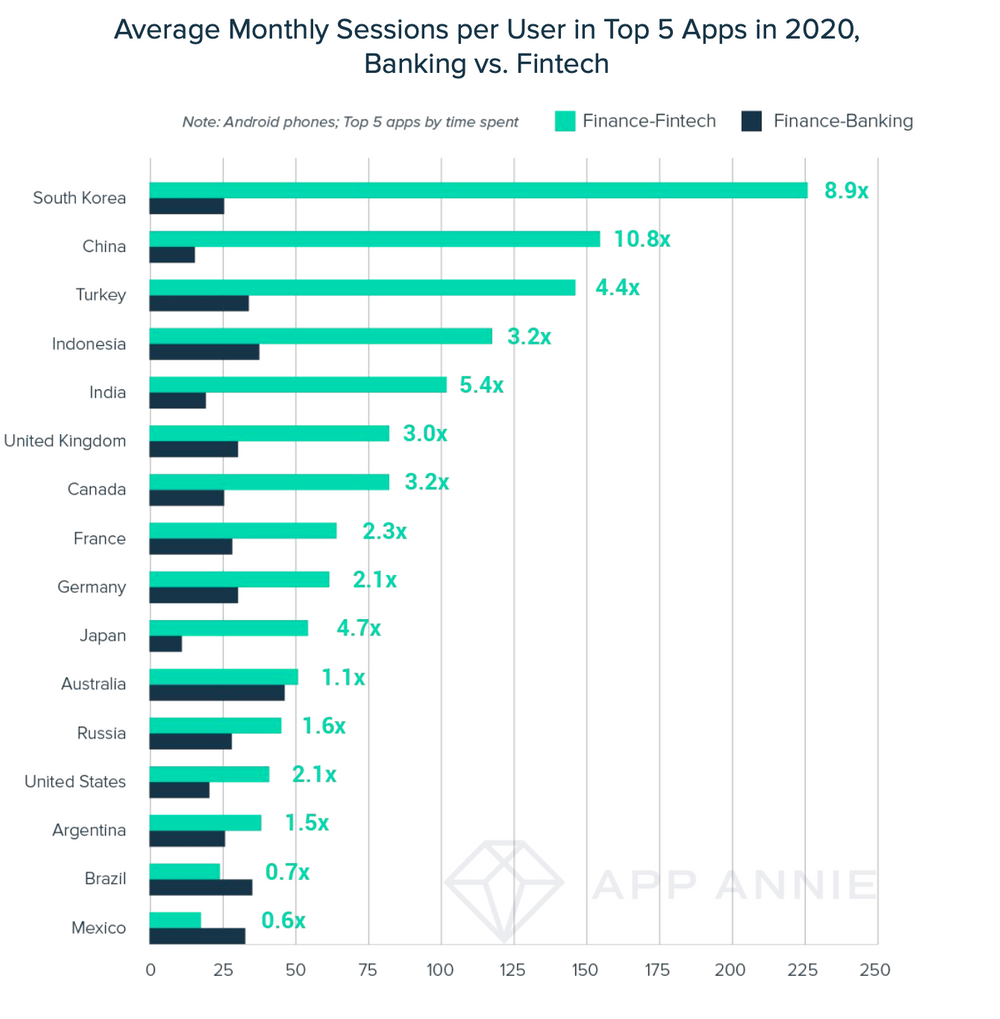
- Retail banking apps continue to be popular in North America and Europe, while fintech apps are rising to the top across the APAC region
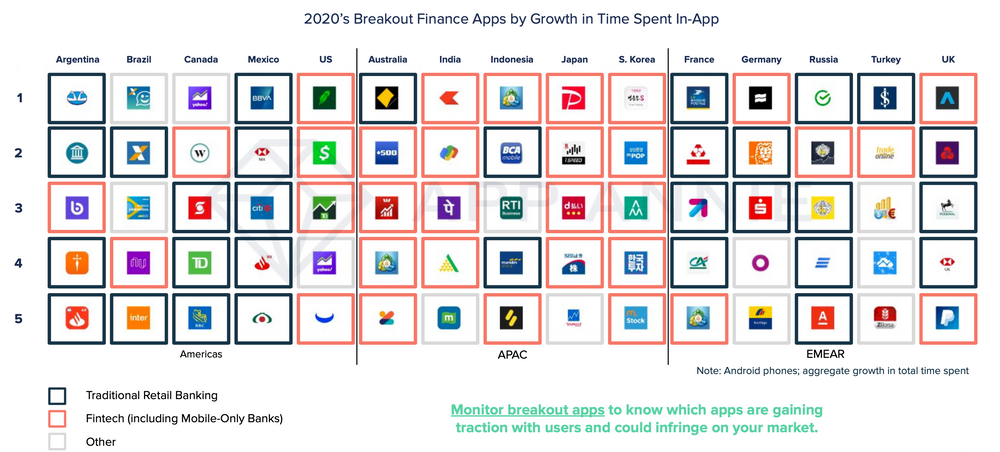
Application Ranking by Growth Rate by Time Spent in an Application (2020)
- Fintech applications perform much better when compared with rates such as customer conversion, interaction, monetary transaction (or revenue generation), etc.
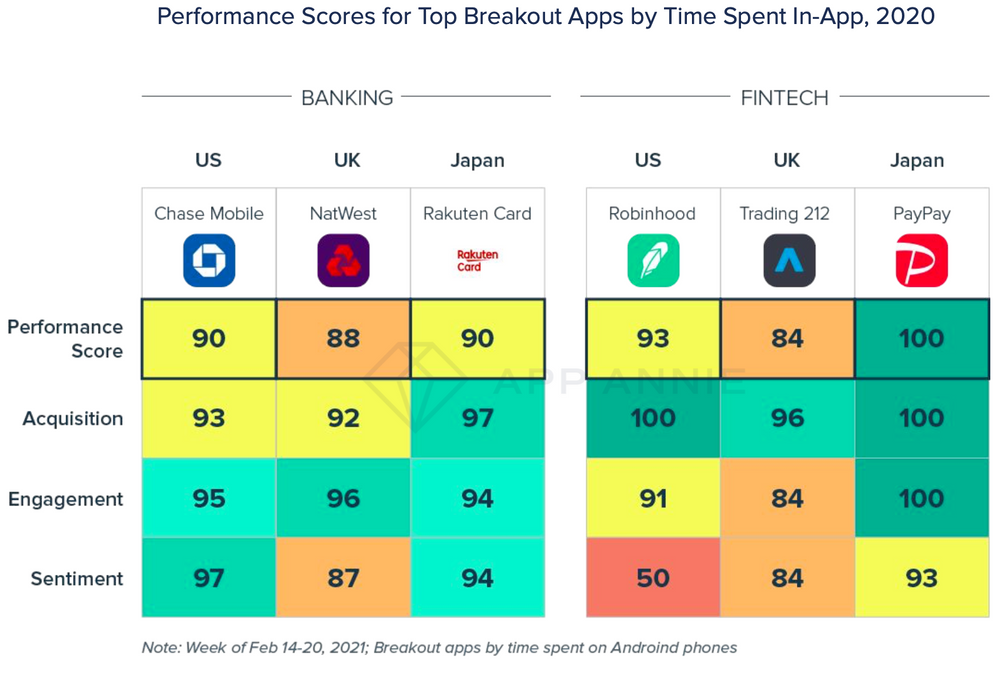
Performance Scores for Best Practices in terms of Time in Practice (2020)
As the report points out;
In 2021, consumers showed more interest in mobile finance transactions than ever before.
Of course, it can also be argued that the economic volatility in 2020 indirectly fuelled the demand for financial markets, financial services and mobile financial services, and indirectly encouraged more consumers to participate in these platforms.
Published by: Fintech Expert Murat Kibaroğlulları
